

Who’s Holding Your Mess?
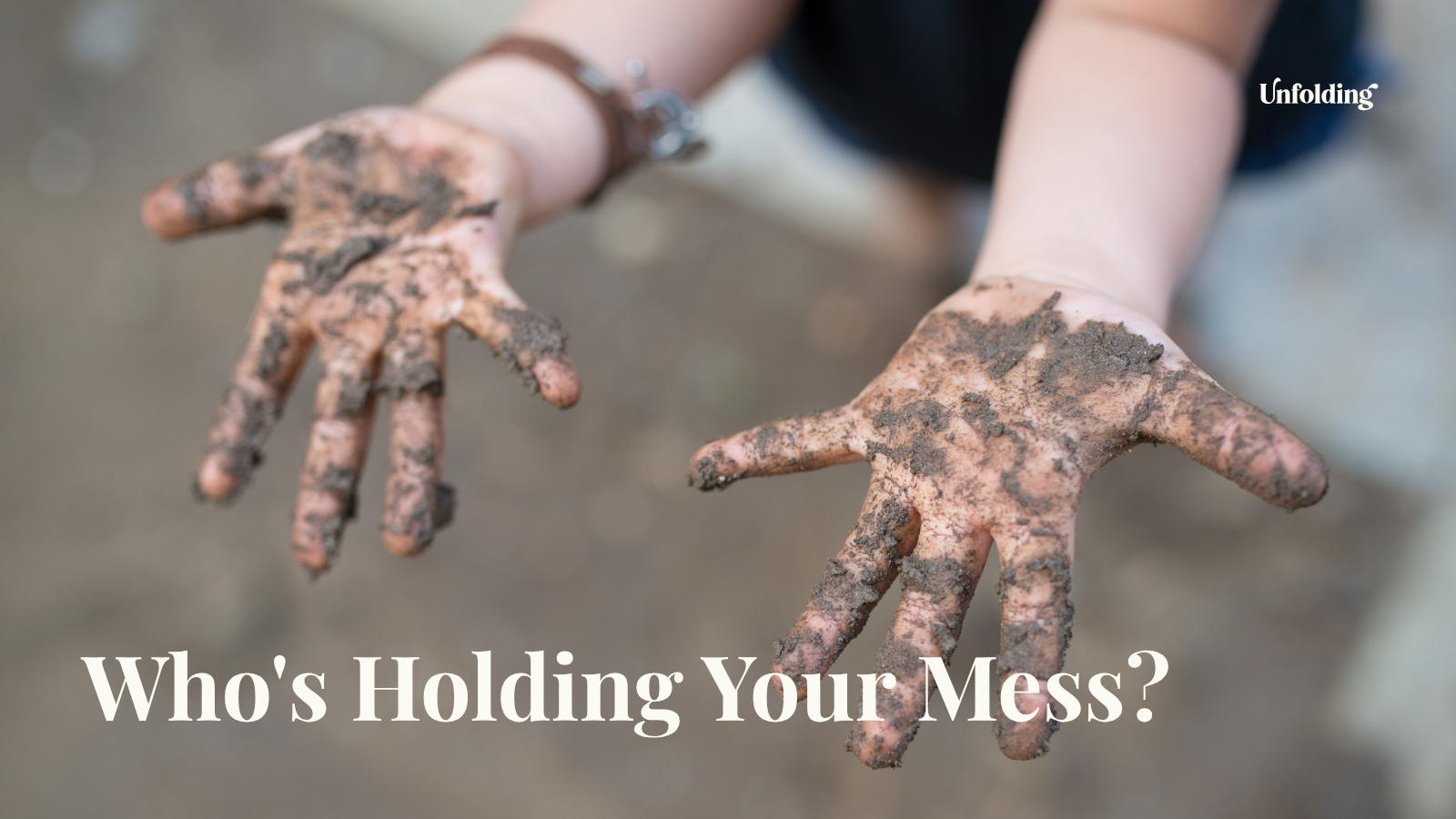
For the women who came through the hard things strong — and are still waiting to let someone hold them.
Recently I discovered something about myself that, like most of what I talk about here, may be unique to me but is universal to all of us.
Every year, I do a roadmap. I use my annual Inspiration and Aspiration planning guidebook to take me through the process; it's anchored in my values, my strengths, and a way of identifying what matters most. At the midpoint of every year, I check in and reflect on how things are going.
This year, I wanted to go deeper into how I'm engaging my strengths, both personally and professionally. So I got some coaching around it.
What it uncovered has stayed with me.
My coach read through my roadmap and noticed something I had never been able to name myself. Every single entry in that document, every goal, every intention, every promise I had made for 2026, was written in the language of giving. Giving to my colleagues, my clients, my team, my aging parents, my sons, my husband, my friends, the women who show up to retreats.
And the one place in the entire document where receiving appeared? It was labeled a growth edge. "Release resistance and allow myself to receive love and joy." The only time I named being supported was to note that I needed to work on it.
I sat with that for a long time.
Here's what the coaching helped me see: my unfolding journey has made me deeply resilient and incredibly self-sufficient, and I am proud of that. I do know how to give myself what I need. I have built that capacity deliberately, over years, and it works. But that same self-sufficiency, that same quiet competence at managing and fulfilling my own needs, has been sending a signal I never intended to send. It has been telling the people who love me that I don't need them to show up. And so, largely, they haven't.
Not because they don't want to show up. Because I haven't left the door open.
Let me be clear about something, because the friends in my life who will read this are some of the most generous, loving, present people I know, and this is not about them. They have not failed me. They have done exactly what I have signaled. When you broadcast capability and self-containment, the people who love you believe you. They take their cues from you. My friends have followed mine. That is on me, not them.
When the coach asked me to describe what reciprocal friendship actually looks like for me in practice, not the feeling of it but the specific things that would happen, I realized I didn't have a clear picture. I have spent so long being the one who holds things for other people that I have genuinely lost touch with what it feels like to let someone hold things for me.
That is a significant thing to name. It took me a while to say it clearly, even to myself.
I wonder if you know this feeling. The particular pride of being the person people come to, and the quiet cost of it. The way that over time the architecture of your relationships gets built around that dynamic, you giving, others receiving, and everyone settling into it because it works, until the day you realize you are tired in a way that your own self-care cannot fix. Because what you are tired of is not the giving. It is the invisibility of your own need.
The coach said something I keep returning to: when you manage your own needs completely, you remove other people's ability to love you in action. Not just feel love for you, but do something with it. And the people closest to you, watching you hold everything together beautifully, conclude that they should too.
Self-sufficiency can be its own kind of armor. And armor, however elegant, keeps things out.
Here is what I think is true for a particular kind of woman, and you may know exactly who I mean, because you may be her. She has moved through real loss. Real adversity. Things that required her to find reserves she didn't know she had, to keep going when going was crushingly hard, to hold herself together for the people who needed her to. And she did it. She came through. She is proud of what she built in the doing of it; the strength, the groundedness, the hard-won knowing that she can handle whatever comes.
For that woman, asking to be held when she feels most vulnerable is not just uncomfortable. It is almost physically at odds with her identity. Because for so long, handling it herself was survival. Leaning on others was a risk she couldn't afford, or a luxury she didn't allow herself, or both. The muscle she built was endurance, not reception. And now, even when the crisis has passed and the people around her are safe and loving and absolutely willing, the old pattern holds. She manages. She is fine. She does not want to be a burden. She does not want to look like she is struggling. She has worked too hard to be seen as capable to let someone see her in the mess.
I know that woman. I am that woman. And I am slowly, imperfectly, learning that the courage that got me through the hard things is the same courage that asking for more requires now. It just points in a different direction.
I am not suggesting we become people who are in constant need. I am suggesting that letting ourselves be seen, really seen, in the mess as well as the mastery, takes more courage than self-sufficiency does, especially for those of us who built our self-sufficiency the hard way. That is the both/and I am sitting with right now: I am genuinely resilient and I am genuinely in need of people who will show up for me. Both of those things are completely true. And still. I am learning to leave the door open.
Three places to start, if any of this landed:
If you are someone who gives with more ease than you receive, consider doing an honest audit of your closest relationships. Not a judgment, just a look: where is the giving flowing primarily in one direction? And is that by design, or by default?
Pick one person and go first. Not in a grand gesture, but in a specific, real ask. "I need to talk through something and I want your perspective, not your solutions." Or: "I could use some company this week." The specificity matters. People who love you want to show up, but they take their cues from you. If you have been signaling competence, they will stand back and admire it. Signal need, and watch what happens.
Finally, consider the possibility that being held is not the opposite of being strong. That allowing someone to see your mess, to sit with you in the unresolved, to carry something with you rather than for you, is its own form of courage. The woman who lets herself be loved in full, not just in her capable moments but in her uncertain and tired ones too, is not weaker for it. She is more whole.
That's what I am working on this year. I would love to know if you are too.